These types of treatments therefore aim to improve oral hygiene and preserve the integrity of the teeth, so that infections or diseases of the oral cavity can be more easily avoided.
This includes procedures such as plaque removal, teeth cleaning or gum and pocket treatment. At NaturaDent, the treatments are carried out by qualified dental hygienists who also play an educational role in the patient's life.
In all cases, they provide assistance in learning the correct dental care techniques, and even offer personalised advice for achieving optimal oral hygiene.
A NaturaDent Dental Hygiene Treatments We offer a range of packages to keep our patients' teeth in top shape.
A foghigiéniai kezelésekre általában hat havonta van szükség a fogak és az íny egészségének fenntartása és a fogászati problémák megelőzése érdekében. Azonban, ha Ön dohányzik, cukorbeteg, vagy hajlamos fogínybetegségre, szükség lehet gyakrabbai orvosi vizsgálatokra. A foghigiéniai kezelések magukban foglalják a fogkő és lepedék eltávolítását, ami segíthet megelőzni a fogszuvasodást, az ínybetegségeket és a rossz leheletet.
Dental hygiene is now an essential part of modern dentistry. Many people are under the misconception that regular brushing is enough to maintain good oral hygiene. Unfortunately, however, this is no longer enough to maintain a beautiful smile and dental hygiene treatments are needed at regular intervals.
During such treatments, qualified dental hygienists can completely clean the teeth of plaque, remove tartar and, if necessary, treat gums and pockets, but always provide the patient with advice to help prevent certain lesions.
For example, few people know that plaque build-up is continuous. Certain foods and drinks can accelerate it, but it is constantly building up and accumulating in the mouth and on the teeth from brushing to brushing.
If plaque is not removed regularly, it will turn into tartar, which is far from being an aesthetic problem. Plaque that is not removed can later lead to inflammation, infection and various periodontal diseases. Also to fog sensitivityCan drive.
Dental hygiene treatment is never too late
Another common misconception regarding dental hygiene treatments is that there are conditions when such interventions can already be considered too late. Many people don't seek professional help simply because their teeth are too yellow, or they have too many dental prosthetics.
But it's never too late to improve your personal oral hygiene and dental care routine. Dental hygiene treatment, complemented by advice, can be a huge help in preventing further deterioration of teeth.
Tooth decay, bleeding gums, periodontal disease or bad breath are all dental problems that no one wants to live with for a long time. Especially because their permanent nature can lead to very serious complications, infections and tooth loss.
However, dental hygiene treatments can help prevent more serious conditions from developing, but let's take a closer look at the most common diseases or lesions that require this type of intervention.
Types of dental hygiene treatments

Ultrasonic descaling
One of the most common tasks in dental hygiene treatment is undoubtedly the removal of dental plaque. It is necessary for most dental procedures and is often the first step in treatment for other problems.
In modern dental surgeries, the removal of tartar is now done using ultrasound, which is not particularly painful. The aim is to make it easier to maintain oral hygiene by removing tartar and thus prevent possible infections.
During tartar removal, professionals use a special instrument that emits ultrasonic waves. These help to gently detach the hardened plaque, or tartar, that has accumulated on the surface of the teeth.
The process does not damage the tooth surface, so it can be used several times a year. Although the rate of tartar formation varies from person to person, at least one check-up is recommended at six-monthly intervals.
For example, during a general dental check-up, we always receive precise guidance as to whether an intervention is necessary or not.
It cannot be stressed enough that the remit of dental hygiene includes both prevention and health education. Therefore, after ultrasonic tartar removal, professionals always provide patients with useful advice to prevent, or at least slow down, the formation of tartar.
Tooth cleaning and polishing
Whether used alone or as part of an ultrasonic scaling treatment, tooth cleaning and polishing are also very important dental hygiene treatments. They are essential because they help to establish the basics of good oral hygiene more easily and effectively.
Smooth and clean tooth surfaces make it much more difficult and less likely for tartar to form. Against this background, and with good dental care habits, it is easy to prevent fossilised plaque from building up on the surface of the teeth.
One of the best and most modern methods of tooth cleaning is intraoral pearl sandblasting. The name may not inspire confidence, but it's actually a harmless and highly effective solution that involves spraying a pleasant-tasting cleaning powder onto the surface of the teeth.
It allows stubborn dirt and plaque to be easily removed without damaging the teeth. The treatment uses water jets and air to blow the dust onto the tooth surface.
The method is not only gentle, but also highly effective, as it can be used to completely remove plaque and deposits from hard-to-reach areas, including grooves.
Sandblasting can be used on its own, but it is also a very good choice as an adjunct to plaque removal or for whitening and cleaning grooves before so-called pre-cavity cleaning, even in hard-to-reach areas.
Laser gum and laser pocket treatment
In our practice, we offer only the most effective laser gum treatment and laser pocket treatment. Gum and pocket treatment is necessary in cases where the patient has significantly neglected dental hygiene, resulting in infections and other lesions in the oral cavity.
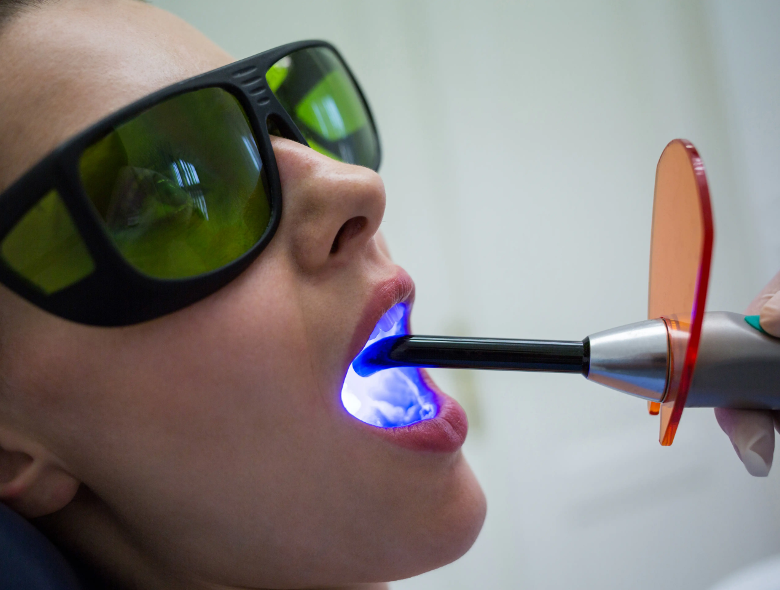
Typically, it is needed after tartar removal and dental cleaning. Laser gum treatment destroys bacteria that settle under the gums, which can cause inflammation and also contribute to tooth decay. The laser light eliminates gum inflammation without the need for antibiotics, thus preventing antibiotic resistance from developing.
Laser pouch treatment by a qualified dental hygienist also helps to speed up the wound healing process and restore the balance of the body's natural defensive response. The laser light helps to eliminate bacteria in the pockets and, with repeated treatments at certain intervals, inflammation can be eliminated. The laser has an analgesic and anti-inflammatory effect, allowing periodontal disease to be treated with much less trauma and effectively.
Laser gum treatment and laser pocket treatment tighten the gums around the tooth.
Personalised dental hygiene advice
It is a common experience that many people need dental and dental hygiene treatments because they are not aware of the methods that can contribute to healthy teeth and good oral hygiene.
Incidentally, a prerequisite for dental treatments is that at least the gums are healthy. This is because related inflammations not only have a negative impact on the teeth but can also call the success of procedures into question.
This is why in many cases it is essential to have dental hygiene treatment before dental procedures.
It should also be remembered that gingivitis can trigger a domino effect within the body, as it can have a negative impact not only on teeth but also on our general health.
For example, it promotes the development of goitre and heart disease, but research shows that inflammation of the periodontium can also increase the risk of premature birth.
At NaturaDent, professional consultation plays a significant role during dental hygiene treatments, which is carried out in a personalised manner and serves to prevent issues in all aspects.
The qualified dental hygienist will draw attention to the need for thorough cleaning of critical areas, but will also introduce you to methods of maintaining professional oral hygiene at home, such as thorough brushing, flossing and brushing.
Please see dental hygiene package offers and book an appointment now.