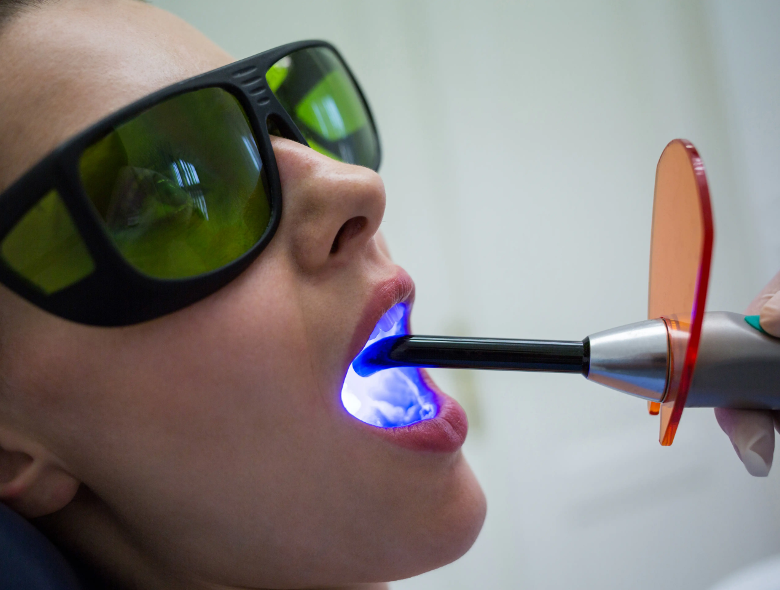
Unfortunately, sometimes a problematic tooth can no longer be saved and must be removed to protect the other teeth, requiring a tooth extraction dentist. Thanks to modern procedures, this oral surgery treatment is now very gentle.
What's worth knowing about tooth extraction?
A tooth extraction is always done for a defensive purpose. The tooth destined for extraction can no longer be saved, or it is obstructing the development of a healthy position for other teeth.
A tooth extraction always performed under general anaesthesia, with the help of a specialist oral surgeon, completely painlessly. What can be done to minimise post-extraction pain?
You will find super tips on this in the following paragraphs!
What is recommended to do before a tooth extraction?
Prior to the tooth extraction, at the earliest 14 days before the extraction, a professional scale removal, descaling It is recommended to participate. During tartar removal performed by a dental hygienist, the teeth are thoroughly cleaned, and tartar is removed, which would provide an excellent breeding ground for inflammation-causing bacteria.
With these precautions, you can maintain a healthy oral flora even after tooth extraction and avoid infection of the extracted tooth. Prevention is essential to ensure the fastest possible healing after tooth extraction.
How long does a tooth extraction take?
Tooth extraction is quick and painless. Our experienced, careful oral surgeon specialists have extensive experience in all types of tooth removal, and in saving other teeth. We always take our patients' physical and mental well-being into consideration, and only remove a painful, problematic, or impacted tooth when all conditions are suitable to do so.
What happens immediately after tooth extraction?
A blood clot, effectively a blood plug, forms at the site of the removed tooth, sealing the wound and preventing bacteria from settling into the hole and onto the bone surface, possibly causing infection. This is why it is important that the area around the tooth and the mouth is completely free of infection before extraction.
In our clinic, after tooth extraction, we place an antiseptic tablet and a small sponge at the bottom of the wound, which stabilises and secures the blood clot. For added safety, a stitch is also placed in the wound to prevent this reinforced blood plug from coming loose. To aid healing homeopathic advice we also give to our patients.
Beyond the care and foresight of our doctors, our patients can also do a lot to preserve this protective zone.
What else should you look out for after tooth extraction?
Basic rule: after tooth extraction, do not suck the wound, and do not rinse or spit!
In addition, milk and dairy products should not be consumed for 2-3 days. This is because dairy products contain a type of bacteria - lactobacillus - which can also contaminate the blood clot.
A tooth extraction is a trauma for the gums and the tissues connected to the tooth, as well as the nerves. Minor pain may occur after the anaesthetic has been absorbed, which, in order to reduce pain, can be calmly cooled with a small ice pack, but strictly from the outside, without direct contact with the extraction site.
What should we do if the blood clot that aids healing is dislodged for some reason?
If the aforementioned blood clot comes out or moves from its place for some reason, it is advisable to see our dentist as soon as possible, who can determine the cause of the shift and, if necessary, replace the filling in the hole left by the tooth.
If we don't, it usually takes 2-3 days for the bacteria in the mouth to take effect and the tooth will start to hurt more after the initial improvement. If the symptoms get worse, get back to your dentist as soon as possible and they will find a solution!
To avoid further complications, a thorough cleaning may be enough, even laser dental devices also used, a laser disinfection or laser biostimulation.
If the pain goes away OK, you can just ask for another appointment in a week for stitching and a check-up. In our practice, we automatically give you a check-up appointment after every tooth extraction, and our dentists can be contacted at any time during office hours for help with any problems, sensitivity or pain that may arise, until the healing process is complete.
We welcome you in our practice!
Ask our dentists and oral surgeons for help. Our team is experienced, trained, caring and always cheerful, and will be happy to offer you all their expertise, up-to-date knowledge, care and attention.