Toothache can make your daily life miserable and can have many causes and complications. Learn about the side effects of an inflamed tooth and the causes of tooth inflammation.
Causes of an inflamed tooth - the background to your dental problem
There can be several causes of a tooth infection, and one of the most common is poor oral hygiene.
Tooth decay can cause the tooth enamel to thin or disappear completely, which means that various bacteria and food particles can easily enter the tooth and multiply inside, causing severe tooth inflammation.
This can be very painful, often accompanied by pain and an abscess full of pus, which contains bacteria that the body has isolated.
The side effects and symptoms of an inflamed tooth can also be caused by overuse, which is the overuse of a particular tooth. So, if you chew too much on one side, the tooth can become overloaded and inflamed. This can cause swelling, redness and sharp pain in the tooth area.
Dentistry can also be caused by chronic periodontitis (pulpitis), root debris, cysts, foreign bodies, periodontitis, chronic inflammation of the jawbone, root canal treatment, and certain gum or tooth injuries.
The dentist will be able to determine the cause of the inflamed tooth and then explain how to treat it.
Side effects and symptoms of an inflamed tooth - if left untreated
It happens that after recovering from a particular illness, we soon find that we have the same complaints again, and this is the umpteenth time.
In such cases, doctors recommend finding the cause of the disease, so-called focus investigation.
The nodule is what causes the disease to become chronic, causing inflammation in the body. There can be many such foci in the body, the most common of which are the following sites that can trigger secondary disease: the sinuses, the sinuses, the teeth, the face, the tonsils, the appendix, the prostate and the ovaries.
Foci of tooth origin include very common inflammation around dead tooth, root canal (where there is inadequate root filling) or root apex, possibly gingivitis, periodontitis, wisdom tooth inflammation.
Inflamed teeth should be treated as soon as possible, as they can develop a number of complications, side effects and absences that can be very painful.
It's also important to know that an inflamed (dead, bacteria-filled) tooth is not always painful. An inflamed tooth can usually hurt not only when pressed or when eating or feeling hot/cold, but can also cause constant stabbing, sharp or throbbing pain.
In such cases, painkillers will no longer be effective, making it difficult to sleep and carry out daily tasks. If left untreated, the side effects of an inflamed tooth can spread to the surrounding area, causing swelling and the formation of a pus-filled sac, an abscess.
As a result, bad breath and an unpleasant taste in the mouth may occur. The inflammation of the tooth may spread to the face, jaw, or other areas of the neck and head. Due to this, the entire face or the affected area may swell.
If we don't treat our inflamed teeth in time, in extreme cases the swelling can block the airways and become life-threatening.
Side effects of an inflamed tooth, in the case of dental treatment
When treating an inflamed tooth, the first thing to do is to reduce the inflammation.
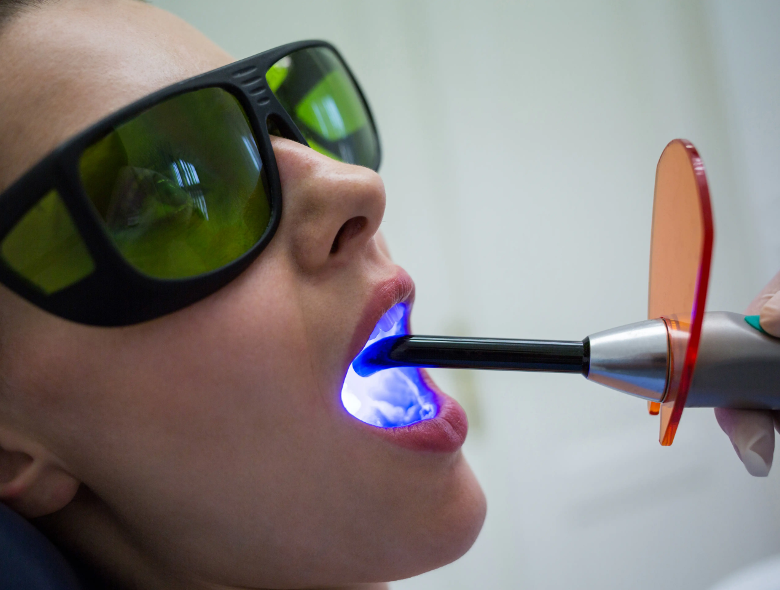
First, we clean the area, destroy the bacteria with a laser, and we may prescribe medication to further reduce inflammation.
Once the inflammation and swelling has subsided, the tooth is root canal treated, also with a laser, treating the root of the tooth to prevent further infection.
At our dentistry, we always try to save the tooth, but in some cases, unfortunately, tooth extraction is the most effective method. We only do this if the inflammation is so bad that root canal treatment cannot help.
The side effects of an infected tooth – How to avoid them
How can gum inflammation be most easily avoided? By regularly visiting your dentist. Annual general dental check-ups and professional dental hygiene treatments are extremely important.
This way we can maintain proper oral hygiene and the health of our teeth. And maintaining healthy teeth is much more cost-effective than treating a major dental problem. In addition, of course, proper daily home oral and dental care is also important.