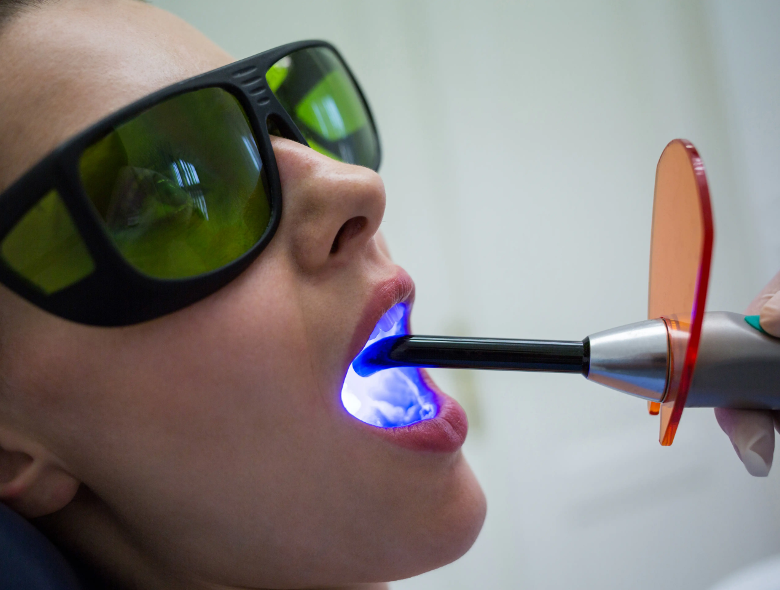
We talk about tooth replacement when we are talking about replacing one or more missing teeth, but also when we need to restore an existing but damaged tooth.
There are fundamentally two reasons why missing teeth need to be replaced:
On the one hand, it's aesthetic, as a full set of teeth is one of the foundations of a beautiful smile.
On the other hand, for health reasons, because a full set of teeth is essential for proper nutrition.
There are now many known methods for tooth replacement. Thanks to modern dental technologies, dentists do everything they can to ensure that artificial teeth not only meet the patient's aesthetic needs but also their functional requirements.
NaturaDent Aesthetic and Laser Dentistry, as the Hungarian representative of modern Western dentistry, offers a wide variety of dental restoration methods for its patients. What are they? Let's see!
Crown
The crown is one of the most common and widely recognised dental restoration methods. It is usually made for a specific tooth based on a special precision impression, which ideally fits the original tooth perfectly.
One of its common characteristics is that the crown is typically fixed onto the prepared stump of the existing tooth, thus practically covering the remaining tooth like a cap on the part above the gum.
Nowadays, dentists and patients can choose from various types of crowns, allowing the restoration to be tailored to the current situation, the needs of the person undergoing treatment, and, of course, their budget.
Metal crowns
Porcelain-fused-to-metal crown
A metal-ceramic crown is one of the most commonly used dental restorations. The reason is that they are cheaper than the metal-free types, but patients may not notice much difference in appearance, especially for posterior molars.
Its appearance matches the shade and appearance of the teeth, with the metal only providing a suitable backdrop for the frame structure in contact with the tooth socket. This ensures good sealing, durability and load-bearing capacity of the crown, which is externally covered with a colour-retaining ceramic coating.
These types of crowns offer patients a natural effect, but they also have disadvantages. For example, they are not suitable for people with metal allergies, and the receding gums can cause a narrow metallic strip to appear at the border of the crown, which is an unpleasant aesthetic problem.
Metal-free crowns
Composite crown
We only mention composite crowns because patients are also often mistaken about this type. This type of crown is made of a mixture of ceramic and resin, but it is by no means suitable for permanent application.
It is typically used in dentistry when there is a need for a longer-term temporary crown that can maintain at least the aesthetic appearance for several months if necessary.
Pressed ceramic crown
Dentures made of pressed ceramic, or porcelain, are among the most spectacular solutions. This is because porcelain has almost the same appearance as real teeth: smooth, shiny, slightly translucent at the ends and extremely durable.
Because they are metal-free, there is no fear of allergic reactions, but they are more fragile than metal ceramics. They are particularly often used for teeth that are in the smile zone, i.e. teeth that become visible when laughing or speaking.
Another big disadvantage is that due to the poor bending strength, pressed ceramic can only be used to replace one tooth at a time, it is not suitable for bridges, so in the case of a stacked problem, it can only be remedied by separately formed crowns.
Zirconium crown
Zirconium plays a huge role in modern medicine. Among other things, it is used for surgical prostheses, but as it is an industrial ceramic, it is also very suitable for dental crowns.
Because of its white colour, its strong base material and its absence of metal, it is often used, especially when both visual and mechanical properties are important. It is also a good choice for the treatment of larger tooth gaps and even for longer bridges.
At NaturaDent, we can also replace missing or damaged teeth with a zirconium crown, all with outstanding professional expertise and thorough computer-aided design, ensuring the new crown fits perfectly alongside your existing teeth in every respect.
Bridge, dental bridge
A bridge, or more specifically a dental bridge, is actually a specialised type of crown that is a good choice for problems with several teeth that are adjacent to each other. It is a continuous prosthesis that can span three or more teeth.
A bridge is a good solution if the patient has a gap and the two surrounding teeth are strong enough to act as a pillar.
As implant placement has become more and more important in tooth replacement, dental bridges are less commonly used by dentists, especially when the crown would require grinding down healthy teeth.
As we are talking about the technology used for the crown, we can distinguish between metal-based and metal-free types. Let's see what you need to know about them in general:
Metal ceramic bridge
In our experience, metal-ceramic bridges are the most popular solution within the category. This is because the strong metal frame allows for a very strong, durable and stable design even when bridging multiple teeth.
The base of metal-ceramic bridges can be made of dental metal or precious metal. Because they have a solid ceramic finish on the outside, the result is aesthetically very lifelike and one of the best in terms of durability.
Zirconium bridge
In addition to metal-ceramics, the use of zirconium bridges is becoming increasingly popular. In particular, it is an ideal choice when longer spans are required, as the higher flexural strength makes it easier to withstand.
Because there is no grey metallic film, the zirconium bridge retains its aesthetic appearance over time, so you don't have to worry about a greyish streak appearing on the lower half of the restoration as the gums recede.
Implant
Implants are one of the most modern and effective tooth replacement methods available. Dental implants can restore the effect of missing teeth not only aesthetically, but also in terms of functionality.
In these cases, the replacement is achieved directly with an implant placed into the jawbone. This provides the same, if not better, retention for the final result than the natural root system of teeth.
In this way, it's possible to replace not just one, but even several teeth at once. The most important condition is that the patient has sufficient bone stock.
With Naturadent and modern dentistry, however, this is no longer an insurmountable obstacle, as bone grafting can easily be used to create the background for the procedure. However, it should be noted that the healing process after implantation takes longer.
Dental restoration options at Naturadent
The process of implant placement
Provided the bone stock is adequate, the prosthetics work begin with the insertion of a special implant. This is a minor surgery considered a routine procedure at NaturaDent, which we perform entirely painlessly.
This is followed by the healing phase, as the crown cannot be placed until the massive implant is fully integrated into the jaw and the gums have fully regenerated. Although there are implants that can be loaded immediately, their effectiveness and durability are questionable.
Once the implant has ossified properly and no inflammation has developed around it, the final crown can be formed, which is made from the materials described above. All this is done in such a way that it perfectly meets the patient's needs and fits into the denture.
Dental implant placement at NaturaDent
In many ways, NaturaDent's dentistry stands out from the rest when it comes to implant dentistry. The use of the latest dental innovations, complete painlessness and the most modern technological background ensure the success of the procedure.
It is important to highlight that the lead dentist and implantologist at NaturaDent is Dr. Márta Fülöp Papp MSc. MSc. MSc., who was the first in Hungary to complete the Master's degree in Lasers in Dentistry at Aachen University and is currently pursuing several PhD studies in the fields of implantology and lasers.
He continuously publishes articles in several Hungarian and international dental journals, thus as a true authority, he possesses vast theoretical and practical knowledge in the field of dental implants, and he gladly applies this knowledge to patients undergoing dental restoration.
Together with his colleague, Dr. Amirhossein Golkhorshidi, an MSc implantologist dentist, they ensure the successful placement of dental implants using the most modern German protocols.
Removable dentures
Removable dentures, or more commonly known as false teeth, are still one of the best ways to achieve an aesthetically pleasing and load-bearing set of teeth, when for some reason, traditional-sized implants cannot be placed.
Thanks to modern dental technology, removable dentures are now highly aesthetic, very easy to clean and the patient can remove and reinsert them without assistance.
These solutions are always tailor-made, ensuring not only a precise fit, but also comfort and stability.
If we supplement all of this with a lifelike appearance and functionality, it quickly becomes clear that although removable dentures are often only considered as a last resort, they are no longer associated with as many negatives as they were decades ago.
Naturally, such prostheses have disadvantages. For example, they can shift during chewing or even simple speech, which can cause discomfort.
It is also important to mention here that if you have load-bearing teeth, it is possible to make partial removable dentures, and even complete dentures can be fixed with mini implants. Dentures fixed on mini implants eliminate the disadvantages of traditional dentures, i.e. they do not fall off when speaking or move when chewing, as they are fixed with these mini implants.
If you have questions regarding dental prosthetics options, please visit NaturaDent, the centre for aesthetic and laser dentistry, where our colleagues have extensive experience in this field.