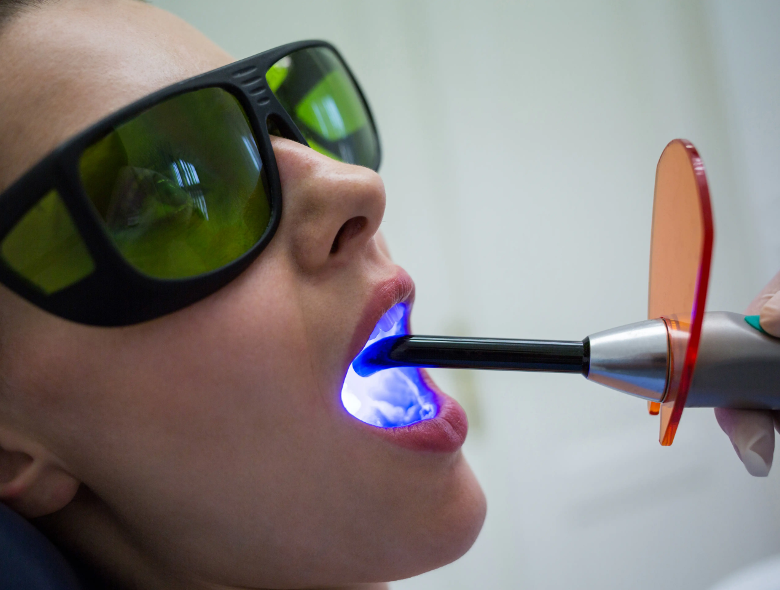
A clicking, painful jaw, nocturnal clenching, pain in the lower and upper jaw, frequent headaches, tinnitus and regular dizziness can all be symptoms of a jaw joint problem that requires complex treatment. The symptoms are most common in women and occur mostly in middle-aged people.
What you need to know about the jaw
The temporomandibular joint (TMJ) is the connection point located in front of the ear that attaches the jaw to the skull, and allows the jaw to move. In terms of its structure, it is similar to other joints in our body: it consists of two bone ends covered in cartilage, surrounded by ligaments and a joint capsule.
The jawbone rests on the skull through the bilateral joints and the dentition when the muscles of mastication close. It is interesting that The temporomandibular joint is the only paired joint in the human body where bilateral movement occurs simultaneously.. Another interesting feature is that two different movements take place in the two spaces of the joint: a rotational movement and a sliding movement.
Grinding teeth, clicking? Here are the causes!
Jaw pain can be very diverse, and consequently, it is often unclear to patients at first what the cause of their complaints is and which specialist they should consult.
The most common symptom is severe pain around the jaw joint, which can extend to the ear, temple, forehead and neck. It may also be accompanied by tinnitus and regular dizziness.
Furthermore, our patients often complain of clicking, popping, and accompanying pain during jaw movement.
What is causing my symptoms?
- It can be a problem if the chewing surfaces of your teeth do not fit together properly, thus holding your jaw joint in an incorrect position even when at rest, in a closed position. This often occurs, for example, after dental restorations, if the dentist did not assess the bite with sufficient accuracy and fitted a restoration that does not fit perfectly.
- Lack of teeth it is often the case that the joint can be subjected to disharmonious stress when chewing. For example, if you chew on only one side because of a missing tooth or teeth, the unilateral load can cause jaw pain, joint problems and wear and tear.
- Night-time grinding, clenching of the teeth also causes constant tension in the jaw joint.
- Today's generally heightened, stressful lifestyle can also have a negative impact on the health of our teeth. A negative consequence of stress is forceful teeth clenching, which is nerve-driven, puts a strain on the teeth, wears down tooth surfaces, can lead to displacement, and also burdens and keeps the jaw joint tense.
There is a solution!
Your jaw joint problem can also be treated, the solution is Gynaecology. This is the branch of science that deals with the jaw joint, jaw movements, position, and problems.
If you have already experienced any of the symptoms listed above, regularly feel pain or clicking in your jaw, or experience teeth grinding at night, then you should definitely consult a gnathologist! Pain from wear and tear of the jaw joint gets worse over time, if left untreated it can become a serious source of pain and make your everyday life difficult.
For the treatment of problems with the jaw joints in our practice, the We use the therapeutic bite lift splint developed by Prof. Lawrence F. Andrews, which has already helped millions of patients worldwide to recover. This splint helps to reposition the jaw joint to a resting position, eliminating pain, grinding, further fracturing of the jaw and chewing surfaces.
By the end of the treatment, your jaw joint will also be in a new position. We will then ensure that your teeth fit perfectly in this new, balanced, tension-free position, maximising both your chewing and aesthetic functions.
Treatment with expert help
We treat jaw joint problems with particular attention and in a unique way at our practice. Attention is paid to restoring the function and arch harmony of your dentition. For both dentures and full mouth reconstructions, we can create a comfortable and functional denture that fits your own archarmony.
In case of any complaints or pain affecting the jaw joint, it is advisable to consult a specialist as soon as possible, as timely treatment can prevent further unpleasant consequences, such as worsening wear and tear of the joint, increased difficulty in chewing, lockjaw, and frequent dislocation of the jaw. A specialist in gnathology is well acquainted with the problem and can treat it using well-established methods.
In our practice, we use the Viennese occlusion theory developed by Prof. R. Slavicek, our leading dentist, Dr. Márta Fülöp Papp He acquired this at the VieSID (Vienna School of Interdisciplinary Dentistry) course. Thanks to this method, which is highly respected and well-established in professional circles, we can effectively treat jaw joint problems at Naturadent.
As with all dental problems, neglecting jaw-related complaints can have serious long-term consequences. Delaying treatment can lead to further wear of the joint and worsening problems.
We are able to determine the equilibrium state of the dentition (the most important step) and achieve real long-term results with factual data. Determining the resting balanced biostatic position (biostatic or biostatic equilibrium: the relationship of moving parts of the body to each other, their interconnection) We create prostheses and full mouth restorations and have achieved outstanding results in our clinic, which has been operating since 2008.
Do you have a temporomandibular joint problem? Consult our expert!
If you've noticed any of the presented complaints or are currently experiencing symptoms, you've come to the right place! Expert Dentist specialists can treat your problem using proven, effective methods.