Although many people believe that teeth whiteness can be maintained with proper oral care, discolouration and shade changes are common even with the greatest care, and can be mostly restored with teeth whitening.
But here the question arises: can teeth whitening be used on sensitive teeth?
Sensitive teeth can cause a lot of discomfort, and anyone who has tried home teeth whitening knows exactly how much discomfort it can cause.
However, this can be prevented by opting for professionalism rather than home practices, because laser teeth whitening is a very good solution for sensitive teeth and can even reduce sensitivity.
Why is laser teeth whitening beneficial for sensitive teeth?
If we look at laser teeth whitening solely in terms of tooth sensitivity, it is essential to highlight the benefits of this procedure right at the beginning of this article:
Precízebb kezelés: A lézertechnológiával sokkal precízebben végezhető a fogfehérítés, így sem az alkalmazott anyagok, sem a lézerfény nem, vagy csak minimálisan érintkezik a lágyrészekkel, ami nem fokozza a kellemetlen panaszokat.
Mérsékeli az érzékenységet: Mivel a lézerrel eltávolíthatók azok a problémák is a fogfehérítés során, amelyek az érzékenységet kiváltották, ezért a kezelés után az addig hidegre vagy melegre érzékeny fogak is javulnak, kevesebb kellemetlenséget okoznak.
Gyorsabb kezelési idő: A lézeres fogfehérítés nagyon gyors, így sokkal kisebb ideig van a gél a fogakon, nincs felesleges irritáció vagy túlérzékenység, ezzel csökkentve a kapcsolódó panaszok kialakulását.
Kíméletesebb a fogzománchoz: Bizonyos fogfehérítő eljárások nagyon erős maró hatású anyagot tartalmaznak. A lézeres kezelés azonban sokkal kíméletesebb a zománchoz, nem károsítja, nem vékonyítja el, amivel szintén megelőzhető az érzékenység, illetve annak súlyosabbá válása.
Minimális hőhatás: A lézerkezelés során nagyon minimális hőhatás éri a fogakat, így nem ingerli azokat az idegeket, amelyek a fog belsejében érzékenységet váltanak ki.
Speciális anyagokkal alkalmazható: Olyan speciális anyagokról van szó, amelyek azon túl, hogy teljesen biztonságosak, képesek csökkenteni az érzékenységet, ezáltal megelőzni a kellemetlenségeket a kezelés alatt és után.
Causes of sensitive teeth
Now that we know that laser teeth whitening is a good alternative for sensitive teeth, it is also worth knowing what can make your teeth sensitive?
If you know the background of tooth sensitivity, you can immediately see the logic behind why it is not recommended to use highly corrosive materials for whitening - whether it is a dental procedure or a home method.
Tooth sensitivity is most often caused by the wear of tooth enamel. The nerves on the inside of the tooth become practically defenceless against the outside world and often react with sharp pain to cold, heat or acidic stimuli, for example.
The same problem also applies if there is caries or significant cracks in the crown of the tooth that have reached the dentin layer.
Sensitivity can also be caused by gum problems, particularly receding gums, which are also a challenge when using non-laser teeth whitening techniques.
This is why home whitening is not recommended if you have sensitive teeth
Whitening always requires great care - whether the patient's teeth are sensitive or not.
Home methods are therefore often said to cause more harm than spectacular results. Let's see why:
A hatóanyagok túladagolhatók: A fogfehérítéshez használt gélek és egyebek kizárólag nagy odafigyeléssel alkalmazhatók. Ha nem ismerjük használatuk pontos módját, otthoni közegben túladagolhatók, ami a fogzománc sérülésével, a fogérzékenység fokozódásával járhat.
Sérülhet a fogíny: A fogfehérítő anyagok maró hatásúak, ezért felvitelük során ügyelni kell arra, hogy ne érintkezzenek az ínnyel és az egyéb lágyszövetekkel. Ez azonban otthoni alkalmazás során nagyon nehéz, ami súlyos ínysérülésekhez, ínyvisszahúzódáshoz is vezethet.
Nincs állapotfelmérés: A fogfehérítés minden esetben (!) előzetes állapotfelmérést és professzionális dentálhigiénés tisztítást igényel. A szuvas fogak, a rossz tömések vagy a fogkő például előbb megfelelő ellátást igényelnek, ellenkező esetben a fogfehérítő anyagok csak ronthatnak a helyzeten.
Tartós fogérzékenység alakulhat ki: A fogérzékenység a legtöbb embernél időszakos, illetve valamilyen külső hatás váltja ki. A nem megfelelő otthoni fogfehérítéssel azonban állandósulhat a probléma és nagyobb kellemetlenségeket okozhat, mint korábban.
The process of laser teeth whitening
Ha valaki meghallja a lézeres fogfehérítés kifejezést, rögtön valamilyen futurisztikus megoldásra gondol, holott ez ma már egy bejáratott technológia, bár prémium minőségben még csak nagyon kevés fogászaton alkalmazzák.
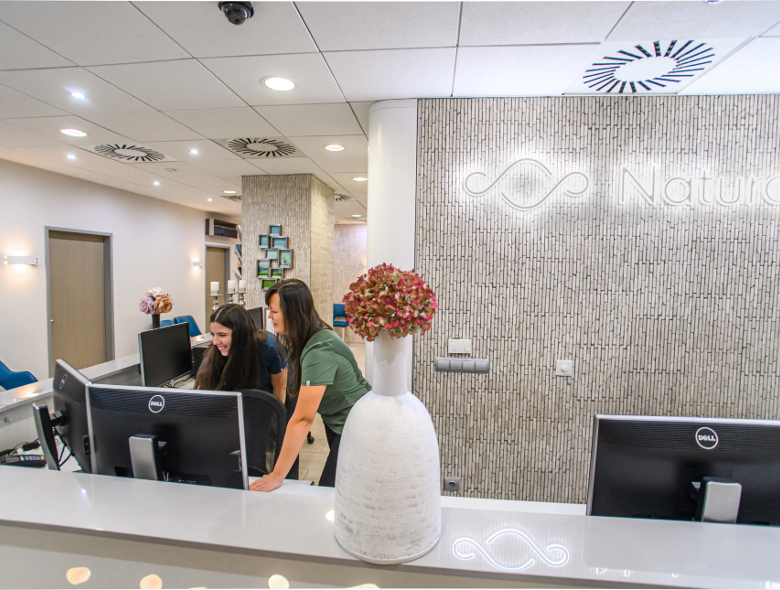
NaturaDent, for example, provides its patients with fast, effective treatment free from side effects using the Biolase ezLASE device and a specially developed whitening material – naturally, even for those with sensitive teeth.
How does laser teeth whitening work in practice? Let's see it step-by-step:
Minden kezelés a fogazat állapotának felmérésével kezdődik, hiszen elengedhetetlen megbizonyosodni róla: minden fog alkalmas a lézeres fogfehérítésre.
If a problem has been identified during the health check, the first step is to focus on solving it.
Laser teeth whitening should always be preceded by a professional dental hygiene cleaning, at least 24 hours before the treatment, to remove any accumulated tartar and discolouration.
Once this is done and everything is in order, the special whitening material is first applied to the teeth, one tooth at a time.
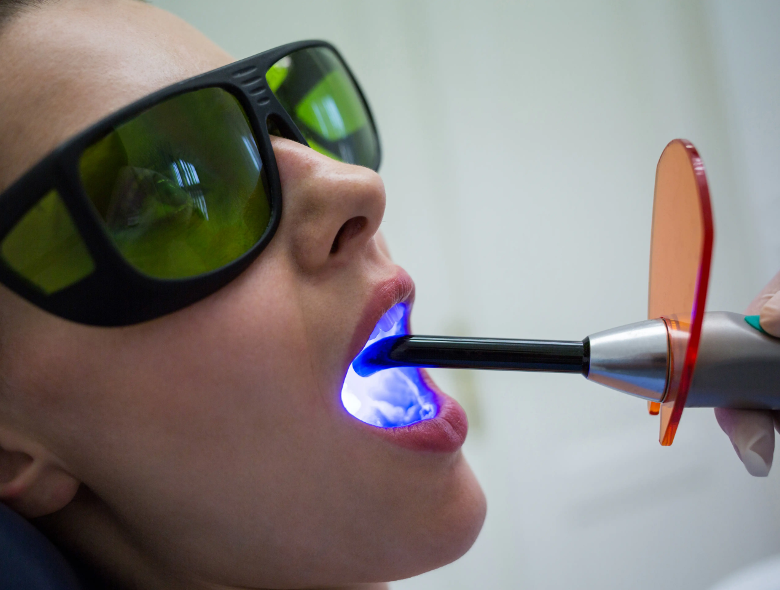
Once the gel is applied, the dental laser is used to illuminate the teeth for 20-30 seconds to trigger the chemical reactions that ensure the whitening process while leaving the tooth enamel intact.
After lighting, the gel is left to work for at least 5 minutes, then the rest of the tooth is treated after removal.
Így zajlik a fogfehérítés a Naturadent rendelőjében
How to prepare for laser teeth whitening for sensitive teeth?
Although laser teeth whitening itself is a very gentle procedure, it is still recommended that you prepare in advance if you have sensitive teeth. Here are some useful tips:
First and foremost, always inform your dentist about any sensitivity, even if it is very mild, as in this case, preliminary treatments may be necessary, or greater care during teeth whitening.
It can be very helpful if we switch to a toothpaste that helps reduce tooth sensitivity one or two weeks before the procedure, as it contains fluoride and potassium nitrate, for example, because these help to seal open dentinal tubules.
Szintén hatékony még, ha a fogfehérítés előtti napokban kerüljük az erősen savas, cukros, forró és jeges ételeket, illetve italokat, mert ezek szintén fokozhatják a fogérzékenységet.
Frequently asked questions
How safe is laser teeth whitening for sensitive teeth?
Professional laser teeth whitening is a completely safe method for sensitive teeth, and can even help reduce sensitivity.
Hypersensitivity after teeth whitening can be caused by a number of factors.
Specifically, when the gel used for bleaching reaches and irritates the dentin layer. This can be easily avoided with the right preparations and treatments.
Is it normal to experience sensitivity after teeth whitening?
Tooth sensitivity can be a common side effect of tooth whitening, which can last for up to 3-4 days after treatment, although it occurs less frequently with laser techniques and is only experienced for 1-2 days.
Is laser teeth whitening painful?
Laser teeth whitening is not painful at all. It may cause mild discomfort and slight sensitivity, but specific pain is not typical.
How long lasting is laser teeth whitening?
This is always dependent on the patient, as the tooth's base shade and lifestyle, for example, have a significant impact on the durability of the results. With proper care, the effects of teeth whitening can remain visible for years.
Can laser teeth whitening be used on teeth with crowns or veneers?
No, there is no possibility of crown or direct shell whitening, usually the shade of the other teeth is matched to these.
What to look out for after whitening?
After laser teeth whitening, you need to follow a so-called “white diet” for at least a week, which means avoiding foods that can discolour your teeth. This includes not only highly pigmented foods such as coffee, tea, red wine, but also carrots, tomato sauces, soft egg yolks. But there's no need to worry, a qualified dental hygienist at NaturaDent will give you a detailed explanation of the details of your diet - which can even serve as inspiration if you've grown tired of our tried and tested recipes.
How often can you repeat a teeth whitening treatment?
If laser teeth whitening is chosen, the efficacy of laser whitening means that it rarely needs to be repeated earlier than a year, so you should not expect more frequent intervals.
Can you see the results of teeth whitening immediately?
With this procedure, the results are really spectacular in the following days, but of course you can see the difference in shade even afterwards.
When is teeth whitening not recommended?
Dental whitening is not recommended in cases of more serious dental problems. These include more advanced tooth decay and various gum diseases.