Gum decay is one of the most serious periodontal diseases, which can lead to tooth loss if left untreated, and research shows that it can have negative health effects on the body as a whole.
It is therefore very important to recognise its symptoms, and indeed to prevent its onset, as gum recession does not develop overnight. It is usually preceded by oral health problems that have been ongoing for months, or rather years.
While for decades it meant the certain loss of teeth, thanks to the development of medicine, there are now very useful methods for treating the disease and even for correcting the gums.
In our article, alongside presenting the symptoms and treatment options for gum recession, we placed great emphasis on outlining preventive measures, while answering all the most important related questions.
Ínysorvadás, vagy fogínysorvadás, egy olyan állapot, amely akkor fordul elő, amikor a fogíny visszahúzódik, így a fogak gyökereinek egy része láthatóvá válik.
Gingivitis, also known as periodontitis, is a chronic inflammatory disease that attacks the tissues surrounding the teeth and causes irreversible damage.
Its precursor is gingivitis, which, without treatment, becomes permanent and then spreads to the deeper layers of tissue, where it damages the tissues that anchor the teeth.
Symptoms of gum recession
Many people confuse gingival recession with gingivitis. However, gingival recession can develop as a result of gingivitis. Therefore, it is important to be aware of which symptoms indicate gum recession.
Among the first symptoms of gum recession is tooth sensitivity, which is most often experienced during eating, brushing, hot/cold drinks, or touch. In addition, the gums retract, making the neck of the tooth visible.
During gum recession, bleeding gums can occur spontaneously or when brushing teeth, possibly leading to gum pockets, bad breath, gaps between teeth, and reddish gums. Less commonly, tooth mobility or migration from their original position may be experienced.
If you are experiencing these symptoms, contact our colleagues immediately!
What causes gingival atrophy?
Gingival atrophy is usually caused by long-standing gingivitis. Like most dental problems, gingivitis is caused by poor oral hygiene. Inadequate cleaning of our teeth can lead to the build-up of bacteria and plaque on the teeth, which, if not properly removed, can turn into tartar.
Tartar irritates the gums, causing them to recede from the teeth in the long run. Poor oral hygiene isn't the only reason for gum recession. Genetic predisposition also plays a significant role in its development. Furthermore, gum recession can occur after certain dental treatments, such as fillings that are too large or ill-fitting crown margins, as these irritate the gums.
Dr. Fülöp Papp Márta, the lead dentist at Naturadent, is examining tooth decay.
How do we treat gum recession at NaturaDent?
At NaturaDent Laser Dentistry, we have put together a comprehensive dental package for the treatment of gum recession. Both the dentist and the dental hygienist play a significant role in the treatment of gum recession.
Before starting your treatment, the dentist will assess the condition of your mouth and teeth during a consultation. Following this, the dental hygienist will perform a comprehensive cleaning, which helps to remove accumulated plaque from your teeth. The dental hygienist will also provide oral hygiene advice to patients to help prevent tartar build-up in the future, teaching them the correct brushing techniques and how to use oral hygiene tools.
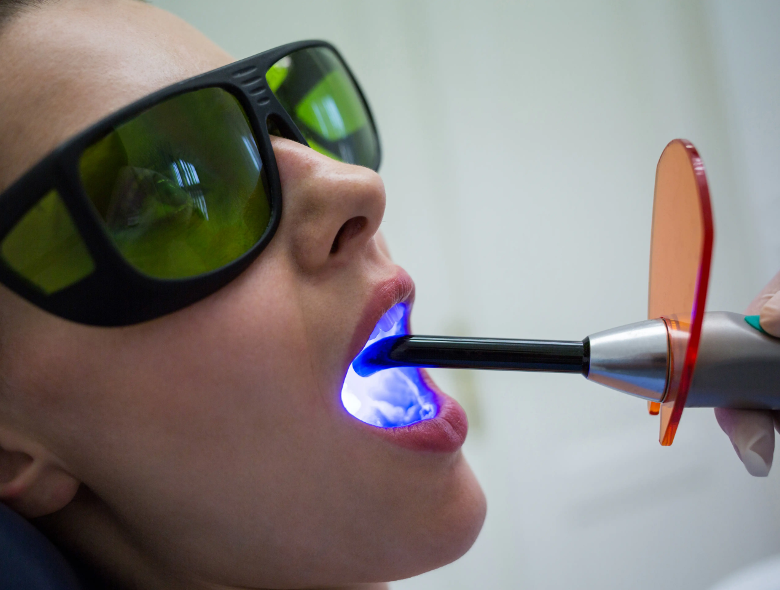
After dental hygiene treatment, we disinfect the gum pockets using the laser available in our practice, thereby destroying bacteria, making the healing process much faster than after traditional dental treatments. Gum recession can thus be treated extremely quickly.
In some cases, depending on how advanced the patient's gingival atrophy is, laser curettage, laser deep cleaning, may be the first procedure to be performed. This process is done under anaesthesia. The doctor will remove the inflamed tissue under the gums and disinfect it locally, also using a laser.
However, our service doesn't end here, as regular check-ups are extremely important, so we will call the patient back in a few months for a follow-up appointment, where we will examine and document the effectiveness of the treatment.
Dr. Márta Fülöp Papp treats gum recession at the beautiful Naturadent clinic.
Is your decayed gum receding?
The gums that have atrophied over the years will not grow back, but the process must be stopped to keep our teeth. There are a variety of surgical techniques available to replace gums, from flap surgery to gum grafting, which you can read more about on our gum surgery page.
Hogyan védekezhetünk az íny sorvadása ellen?
Proper oral hygiene is the most important thing we can do to prevent gum recession and almost all dental problems. That is why we emphasise not only home dental care but also regular professional dental hygiene treatments.
And during home oral hygiene, in addition to a toothbrush, we should use dental floss, interdental brushes, and occasionally mouthwash, which disinfects the oral cavity. With regular use of these aids, we can prevent plaque formation.
If tartar has formed, it is strongly advisable to have a professional tartar removal, and annual dental check-ups are also very important, as they help to detect the problem early.
Not only is proper oral care important to keep your teeth healthy, but so is a healthy lifestyle. Avoid smoking, alcohol, sugary foods/drinks and stress.
You wouldn't believe the impact our habits and overall health can have on our teeth.
How do you know if you have gum disease?
The symptoms of gum disease can be noticed if you pay attention to the condition of your teeth. If any of the above symptoms affect you, you should consider a general dental check-up and consultation. The best thing you can do is to have your teeth checked regularly by a dentist, who is an expert at recognising and knowing what can be done to prevent it.
Risk factors for gum recession
Several risk factors are known to increase the risk of developing gingival atrophy.
It is common for many people to develop this serious condition due to cumulative problems and chain reactions, so below we have collected the factors that can contribute to its development:
Age: As we get older, the risk of gum recession often increases because the ability of connective tissues to regenerate decreases, and the likelihood of tooth decay also becomes greater.
Genetic predisposition: Observations confirm that a predisposition to gum recession is hereditary, and the presence of certain genetic variants can make inflammatory processes more likely to develop.
Hormonal changes: hormonal changes always affect oral health. Hormonal changes in oral health are always subject to hormonal changes.
Poor oral hygiene: since the main cause of gum problems is often due to bacteria that are not removed, poor oral hygiene is always a risk factor.
Smoking: Smoking has an extremely negative impact on oral health, as the harmful substances in the smoke impair gum circulation and slow down regeneration, which in the long term can promote the appearance of gum problems.
Alcohol consumption: some research has also found a link between excessive alcohol consumption and gum problems, so it is also worth aiming for moderation or avoiding alcohol altogether.
Diabetes: Well-controlled, managed diabetes generally does not, but high blood sugar levels promote the development of bacterial infections in the oral cavity, which can lead to severe gum disease.
Autoimmune diseases: If the human immune system does not function properly, i.e. an immunodeficiency state develops, this can be accompanied by chronic inflammation – even in the oral cavity.
Vitamin deficiency: A lack of vitamins C and D, as well as calcium, in particular, increases the risk of periodontal disease, which can be easily prevented with supplementation and a healthy diet.
Stress: stress is an underestimated psychological problem that can even cause severe physical symptoms, affecting the immune system and inflammatory processes.
Inappropriate dental treatments: Poor fillings or other improper dental interventions can hinder the ability to maintain proper oral hygiene, which can be a cause of gum problems.
Aftercare of gum recession
If gingival recession has been successfully treated and its visible signs removed by gingival plastic surgery, proper aftercare is essential from the patient to prevent recurrence.
Let's look at the main points of aftercare from this perspective:
Regular professional teeth cleaning: To avoid the recurrence of gum recession, it is recommended to undergo professional plaque and tartar removal and teeth cleaning at least once every six months.
Premium oral hygiene: Oral hygiene is the foundation of everything. It is essential to thoroughly brush your teeth twice a day with a soft-bristled toothbrush, use dental floss and interdental brushes, and use toothpaste and mouthwash that offer powerful gum protection.
Lifestyle change: As lifestyle often has a particularly negative impact on the condition of the gums, it is worth paying special attention to avoiding smoking and alcohol, eating a healthy diet, supplementing vitamins, and reducing stress.
Continuous self-examination: The precursor conditions for gum recession generally have very visible symptoms. It is worth paying attention to these and ensuring thorough self-examination every day so that problems can be identified in good time.
Frequently asked questions
How common is gum recession?
Estimates suggest that almost one in two people worldwide regularly suffer from periodontal disease.
The extent of this is naturally variable, but most cases involve mild gingivitis, which can be treated very effectively if detected in time, and its recurrence can be prevented.
Specifically, gum recession affects far fewer people, but in 7-8% of those suffering from recurrent gingivitis, this serious condition often develops.
How long does it take for gum recession to develop?
It varies greatly, but for most people, it takes months, or rather years, for gum disease to progress to the point where we can talk about gum recession. The process is gradual in all cases.
Does gum recession hurt?
It doesn't directly cause severe pain, but as the gums recede, the teeth become extremely sensitive to external stimuli, which can lead to a lot of pain.
Does gum recession always lead to tooth loss?
It depends on the patient. Some people do not lose teeth even at an advanced stage - for example, because the roots are too long - while others may lose teeth at an early stage. However, with timely recognition and treatment, this can now be easily prevented.
Why is an X-ray needed for gum recession?
This is because the process can damage not only the gum tissue but also the bone tissue, which can be detected by X-rays.
Can gum recession develop in youth?
Yes, its development is not age-dependent. If someone has a genetically higher predisposition to gum recession and does not pay attention to proper oral hygiene, the problem can occasionally appear even in childhood.
Can I have an implant after gum disease?
If the gums have healed properly, the inflammation is gone and there is enough bone left, there is no problem with a tooth replacement. If the jawbone is severely damaged, bone grafting can still support the implant.
My gums are bleeding: do I have receding gums?
Not necessarily. Bleeding gums are usually an early symptom of gingivitis, so if you haven't had this kind of problem before, you don't need to immediately think of the worst-case scenario. However, if the bleeding is persistent, a dental examination is warranted without delay.
Receding gums: is this gum recession?
Not in all cases. Receding gums can also have a mechanical background – for example, overly vigorous tooth brushing, some kind of trauma, or perhaps thin gum tissue – so there's no need to panic immediately, but it is advisable to have a dentist examine it as soon as possible.