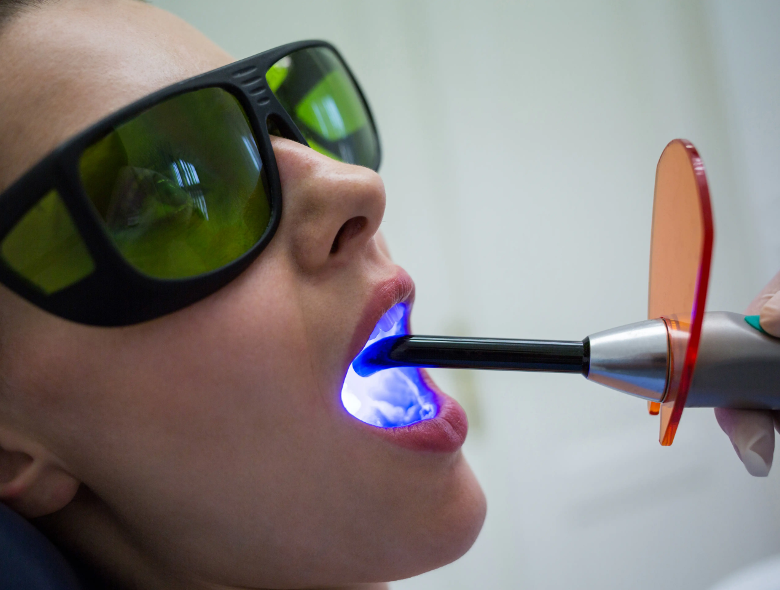
The cavity, the tooth decay Its appearance is the most common dental problem that we encounter day in and day out in our practice.
Tooth decay usually appears in hard-to-reach, hard-to-clean places, as food debris and impurities can only be completely removed from these areas with very thorough brushing.
Unfortunately, the process of tooth decay is irreversible, but if it is detected early enough and a doctor is consulted, the deeper layers of the cavity and the spread of decay can be stopped.
Process of cavity formation
The holes in teeth appear as a result of tooth decay. This process begins when food debris remains on the surface of the teeth, in their grooves, or between the teeth.
This is when carbohydrate-eating bacteria produce acid, which damages and breaks down tooth enamel, thus gradually leading to the appearance of a cavity. Initially, only a tiny spot appears on the tooth, which we often don't even notice, and at this stage, we usually don't experience any symptoms.
However, if this condition is not recognised and treated in time, tooth decay will continue, pathogens will penetrate deeper and deeper and damage the tooth more and more. At the end of the process, cavities form in the tooth, where bacteria can colonise and cause inflammation in the tooth's cavity, which can lead to severe pain.
A lyukas fogat a következőkről lehet felismerni: * **Fájdalom:** Ez az egyik leggyakoribb tünet. A fájdalom lehet állandó, vagy csak rögezidőre jelentkezik, különösen evés vagy hideg/meleg étel fogyasztása közben. * **Érzékenység:** A fog érintésre vagy nyomásra érzékennyé válhat. * **Szürkés vagy fekete foltok:** A fog felszínén, különösen a rágófelszínen vagy a fogközökben sötét foltok jelenhetnek meg. * **Lyuk vagy rés a fogban:** Néha szemmel látható lyuk vagy bemélyedés keletkezik a fogon. * **Rossz lehelet:** A lyukas fogban felhalmozódó baktériumok kellemetlen szájszagot okozhatnak. * **Ínygyulladás:** A lyukas fog melletti íny pirossá, duzzadttá vagy vérzővé válhat. * **Evési nehézségek:** A fájdalom miatt az érintett foggal való rágás kellemetlenné válhat. Ha a fenti tünetek bármelyikét tapasztalod, javasolt mielőbb felkeresni egy fogorvost.
Tooth decay can have different symptoms depending on how much of the decayed tooth it affects. The most common complaints are as follows:
- Sensitivity after eating sugary foods
- Pain after consuming hot or cold food and drink
- General tooth sensitivity
- Patches visible on the surface of the fog
- Pain when chewing
In more serious situations, the pain of a decayed tooth becomes constant, which can cause difficulties in carrying out daily tasks. The inflammation in the tooth can deepen, which, in addition to persistent pain, can lead to tooth loss.
However, all of this can be prevented if you visit your dentist at the first signs of symptoms and attend regular dental check-ups, where the progression of tooth decay can be identified and stopped even before symptoms appear.
Hole in tooth treatment at Naturadent clinic
In our practice, the handling of complaints always begins with an examination, taking a panoramic X-ray, and compiling a personalised treatment plan.
If you have a cavity, we offer various solutions for treating the tooth, depending on the extent of the decay, its location, and your needs.
Treatment of tooth decay with aesthetic filling
If caries is detected in time, the problem can be treated simply and painlessly with an aesthetic filling. Thanks to our laser dentistry equipment, we can remove the damaged, diseased part of the tooth without the use of a classic dental drill, using the power of a hard-tissue laser.
A Filling the fog is done in our practice with a reliable, durable, long-lasting and aesthetic filling material that matches the colour of the tooth perfectly. This allows us to replace the lost material in the area of the cavity without you having to worry about your teeth being crowded.
The modern filling materials used in our practice, in contrast to the previous amalgam fillings, do not contain any harmful substances and can be used with complete safety.
The result is a painless treatment and a long-lasting, aesthetically pleasing tooth that functions as the original tooth.
Treatment of extensive tooth decay – inlay and onlay restorations
In cases where the caries has already affected most of the cavity, it is called inlays or onlays We use these. With their help, we can ensure that the tooth remains stable, functions well, and its health can be preserved for many years even after removing decayed parts.
After impressions are taken, the crowns are made by dental technicians and then cemented onto the relevant teeth.
Inlay-type inlays are used in the absence of a leaky tooth inside, thus sealing and fixing the inside of the tooth. We provide a fixed chewing surface and support the remaining and intact tooth material, the edges of the tooth.
The onlay inlay is recommended for larger tooth gaps when the root and side surfaces of the tooth are still intact. Compared to an inlay, the onlay inlay is a solution that can withstand greater loads and its function is to replace the missing chewing surface.
If tooth decay affects the inner layers of the tooth – root canal treatment
If the x-ray shows that the pulp, or the pulp lining, inside the tooth has also been damaged by the bacterial infection, and the decay has spread to the blood vessels and nerves in the tooth, it becomes necessary to Root canal treatment.
We then clean the root canal, remove bacteria on the surface, completely disinfect the tooth and the infected pulp that is causing the pain. Using our laser instruments, we can quickly and painlessly remove the bacteria causing the inflammation from the affected parts of the tooth.
After the root canal treatment, a temporary filling is first placed in the tooth with medication to completely eliminate the existing inflammation. Afterwards, depending on the extent of the damage to the tooth structure, dental crown or a filling will be put in the tooth.
There are also cases when tooth decay affects the entire tooth, and there isn't enough healthy tooth structure left to restore it to a healthy state. In such instances, the dentist cannot save the tooth, and extraction, the removal of the tooth, is necessary.
This is how to prevent tooth decay
As with any illness, prevention is the most important factor when it comes to tooth decay. By establishing a regular and thorough oral hygiene routine, and attending dental check-ups at least once a year, most dental problems, including tooth decay, can be detected early and are easily treated in their initial stages.
If you want to pay special attention to preventing tooth decay, you should pay attention to the following when developing your daily habits:
- Clean your teeth at least twice a day using fluoride toothpaste. In the evening, floss or brush your teeth to remove food particles and dirt from hard-to-reach areas, preventing tooth decay.
- Rinse regularly with mouthwash. Mouthwashing also helps to remove all the dirt, minimising the amount of food residue left on teeth.
- Visit at least twice a year for dental hygiene treatment. During these sessions, our expert dental hygienists will thoroughly clean your teeth, remove tartar and polish the surface of your teeth, contributing significantly to maintaining healthy oral hygiene. They will also help you to effectively clean and care for your teeth with personalised advice.
- Visit your dentist regularly. We cannot stress enough how much inconvenience and annoyance can be prevented by have regular dental check-ups twice a year.
A thorough dental examination can reveal numerous problems – such as early-stage tooth decay, for instance – that are still developing or might be asymptomatic. Timely detection significantly improves the chances of saving the tooth. - Avoid excessive consumption of sugary, acidic soft drinks.t. Unfortunately, these have a detrimental effect on the health of our teeth and significantly accelerate the process of tooth decay. Instead, drink water, sugar-free and non-carbonated refreshments.
There's no point in postponing the treatment
If you are regularly experiencing the listed unpleasant symptoms, or perhaps frequently feel toothache, please book an appointment for a dental check-up and consult our expert dentists as soon as possible!
At Naturadent, treatments are carried out under general anaesthesia, under gentle care, and, if necessary, with the use of laser dentistry. During the assessment and during the treatment, we place great emphasis on fearless communication, providing our patients with maximum information and answering their questions.
Experience your dental treatment in complete peace and comfort, leaving behind any previous negative assumptions or experiences. Thanks to our modern equipment and decades of experience, treatment will be gentle, and the results will be precise and long-lasting.
Don't put off treatment! If you see your dentist in good time, tooth decay can be eliminated quickly and painlessly, and unpleasant, painful symptoms will disappear immediately with the treatment of the carious tooth.